This is the question I get alot, and it’s usually asked by a runner who’s already read that strength training helps – the “should runners lift” debate is settled. What isn’t settled, and what generic advice never actually answers, is whether you, six weeks out from a half marathon with no lifting history, should start now or leave it until the block’s over.
The honest answer is: it depends, and it depends on three things specifically – where you are in the block, your injury history, and your current weekly volume. Here’s how I actually work through it with a runner in front of me.
The three questions that decide it
1. How many weeks out from race day are you? Starting a new strength stimulus creates a short window of extra fatigue and mild soreness while your body adapts – usually 1–2 weeks. That’s a manageable cost 8+ weeks from a goal race. It’s a real risk inside the final 3 weeks, when you need your legs fresh for taper, not adapting to a new stimulus.
2. Do you have a current or recent injury, especially anything load-related – shin splints, Achilles issues, stress reactions? If yes, this flips the calculation. A targeted strength program addressing the specific restriction behind that injury often needs to start immediately, even mid-block, because the injury risk of continuing to run unaddressed usually outweighs the short-term fatigue cost of starting to lift.
3. What’s your current weekly volume, and is it still climbing? If you’re in a volume-building phase, adding a new fatigue source at the same time makes it harder to tell which variable is causing an issue if one shows up. If volume has plateaued or you’re holding steady, there’s more room to add strength work without confounding your load management.
The decision tree
Early in the block (8+ weeks out), no current injury, volume still climbing – Start now, but conservatively. Begin with one session a week at moderate load, and don’t increase running volume and strength load in the same week. Let one variable move at a time.
Mid-block (4–8 weeks out), no current injury – Depends on how it’s going. If training is on track and you’re recovering well, add strength now – you have enough runway to adapt before it matters. If you’re already managing fatigue or a niggle, wait until after the race and address it properly in the off-season instead.
Late block (under 3 weeks out) – Wait, in almost every case, unless you have an active injury issue below. New stimulus this close to race day isn’t worth the fatigue cost, and the performance gain from a few weeks of new strength work won’t materialise in time to matter for this race anyway.
Any point in the block, with a current or recent load-related injury – Start immediately, but not with generic exercises – this needs to be built around what’s actually restricted (see the self-screen below). This is the one scenario where “wait until after the race” is usually the wrong call, because the injury is often what determines whether you make it to race day running at all.
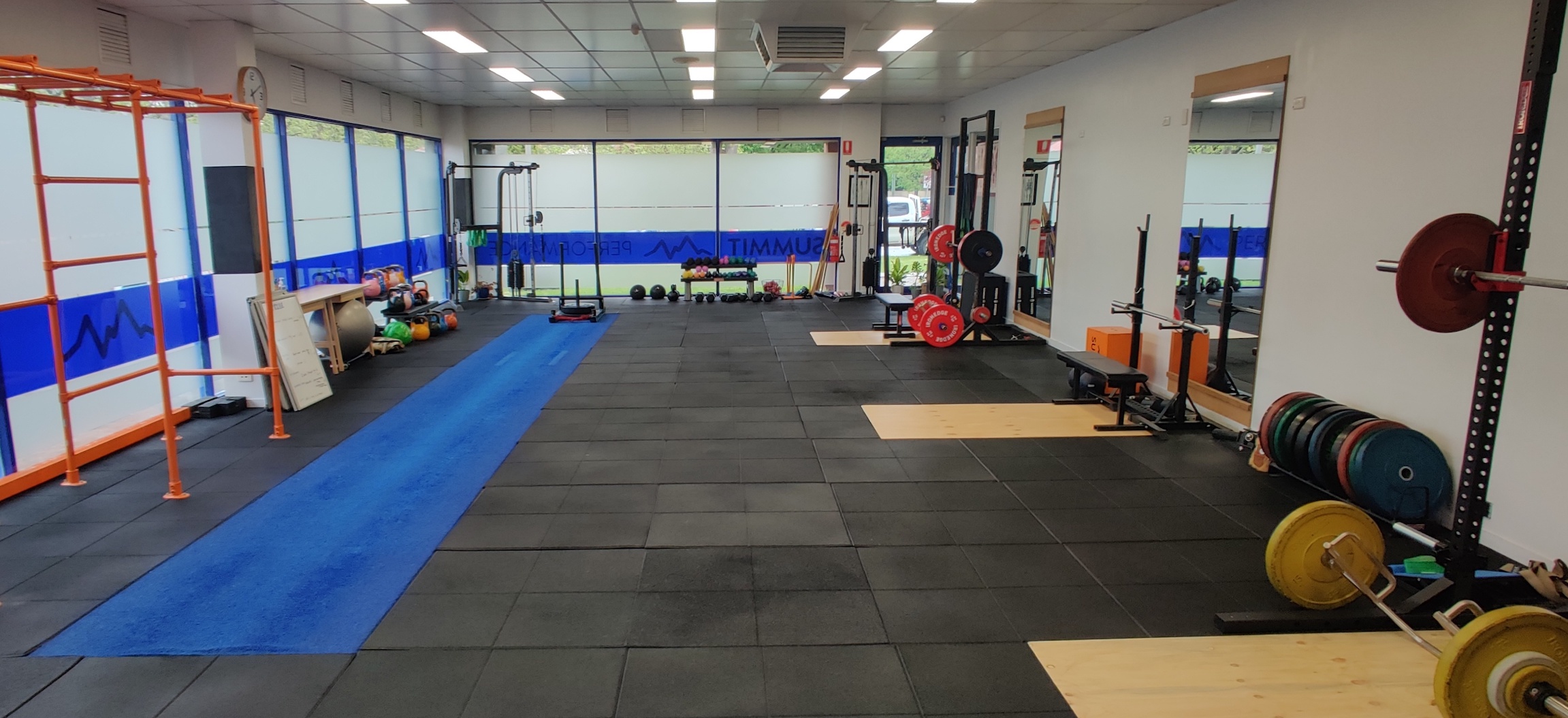
A case from Summit studio
A runner came to me eight weeks out from a half marathon, no strength training history, mild but recurring shin discomfort that hadn’t stopped her running but was nagging every third or fourth session. Generic advice would say either “rest it” or “keep going, it’s probably fine.” Neither was right.
The screen showed a clear ankle dorsiflexion restriction on the same side as the discomfort – the actual driver, not the shin itself. We started targeted ankle and calf loading immediately, two sessions a week, and held her running volume flat rather than increasing it for two weeks while she adapted to the new stimulus. The shin discomfort resolved inside three weeks, and by week five we resumed normal volume progression with the strength work still in place. She finished the block uninterrupted and ran the race.
If we’d waited until “after the race” as generic advice often suggests, that discomfort had a real chance of becoming a stress reaction serious enough to end the block early. If we’d added generic squats and lunges without screening first, there’s a decent chance we’d have loaded the wrong pattern and made no difference at all.
What to actually check before you decide
The injury-history branch above only works if you know what’s actually restricted, not just where it hurts. (A free interactive self-screen – the same checks I run with runners in that first conversation – is coming soon.)
The bottom line
“Should runners strength train” isn’t really the question anymore – the evidence there is settled. The question that actually matters is whether you, right now, in this block, with your history, should start today or wait. That call depends on weeks-out, injury status, and volume trend together, not any one of them alone – and it’s exactly the kind of judgement call a generic program can’t make for you, because it was written before it knew any of those three things about you.